


Greek Food vs. Mediterranean Food: What’s the Difference? | The Greek Bar Austin

When people search for Mediterranean food in Austin, they are often looking for something fresh, generous, colorful, and full of flavor. They might be craving grilled seafood, bright salads, dips with warm pita, olive oil, herbs, lemon, wine, and food meant to be shared.
Greek food certainly belongs to that world. But it is not simply “Mediterranean food” in a general sense. Greek cuisine has its own language, history, ingredients, and spirit.
At The Greek Bar, we like to think of Greek food as Mediterranean with a very specific point of view: sun-soaked, ingredient-driven, generous, soulful, and built around the table.

Mediterranean Food Is a Region. Greek Food Is a Cuisine.
“Mediterranean food” is a broad term. It can refer to the cooking traditions of Greece, Italy, Spain, Turkey, Lebanon, Israel, Morocco, southern France, and other countries that border or are influenced by the Mediterranean Sea.
That means Mediterranean food can include many different flavors and styles: grilled fish, warm pita, pasta, tapas, olive oil, citrus, herbs, legumes, yogurt, seafood, lamb, and more.
Greek food is one of the great cuisines within that Mediterranean family.
It shares many classic Mediterranean ingredients — olive oil, lemon, herbs, seafood, lamb, legumes, grains, greens, and wine — but expresses them in a distinctly Greek way.
Think oregano, dill, mint, feta, grilled meats, whole fish, village salads, slow-cooked vegetables, creamy dips, crisp phyllo, Greek cheeses, honey, and the kind of food that feels both rustic and elegant.
The Greek Table Is Built Around Sharing
One of the most beautiful parts of Greek dining is the way the meal unfolds. It is rarely just one plate in front of one person. Greek food is social by nature.
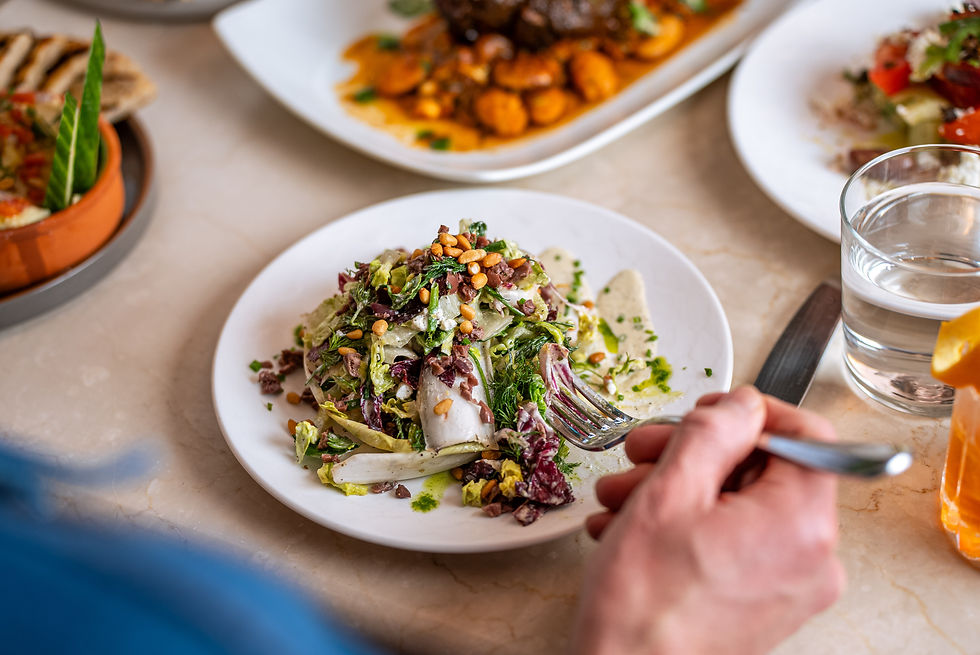
A table might begin with mezze: tzatziki, tirokafteri, favosalata, melitzana, skordalia, dolmades, spanakopita, zucchini fritters, calamari, or something warm and savory with kefalograviera. From there, the meal might move into skewers, lamb, whole grilled fish, moussaka, Greek fried chicken, or a bottle of Greek wine for the table.
This is why our dinner menu is designed for both sharing and lingering. It lets guests build the kind of meal that feels casual, abundant, and celebratory all at once.

Greek Food Has Its Own Signature Ingredients
While Greek cuisine overlaps with the broader Mediterranean diet, there are certain ingredients and combinations that make it immediately recognizable. Greek food has a rhythm of its own: extra virgin olive oil, lemon, oregano, dill, mint, garlic, feta, kefalotyri, kefalograviera, Greek yogurt, lamb, whole fish, wild greens, olives, legumes, honey, and crisp layers of phyllo. These ingredients are simple on their own, but together they create the unmistakable brightness, depth, and generosity of the Greek table.
Olive oil is especially central to Greek cooking and the broader Mediterranean way of eating. It is not just a cooking fat — it is part of the culture, the flavor, and the rhythm of the meal. For more on the role of olive oil in Mediterranean eating, Harvard Health offers a helpful overview of olive oil and its nutritional benefits.
Greek Food Is Both Ancient and Modern
Greek cuisine is deeply rooted in tradition, but that does not mean it is frozen in time.
At The Greek Bar, our approach is contemporary but grounded. We honor classic Greek flavors while bringing them into a polished South Austin setting: mezze for the table, Greek wines, fresh seafood, lamb, cocktails, brunch, and a patio made for long meals with friends.
That balance is what makes Greek food so special. It can feel nostalgic, rustic, celebratory, healthy, and modern all at once.
Greek Wine Is Part of the Experience
One of the most overlooked parts of Greek dining is Greek wine.
Greece produces beautiful, expressive wines that pair naturally with the food: crisp Assyrtiko with seafood, rosé with mezze, reds with lamb, and refreshing whites with bright lemony dishes and herbs.
If you are new to Greek wine, a meal at The Greek Bar is a good place to begin. Our wine list is built to complement the food — fresh, mineral, coastal, and made for sharing.

Why Greek Food Works So Well in Austin
Austin loves food that feels vibrant, social, and full of personality. Greek food fits naturally here. It is fresh but satisfying, casual but refined, and perfect for both everyday dinners and special occasions.
It also works beautifully for the way people like to eat now: shared plates, lighter dishes, grilled proteins, vegetable-forward sides, great cocktails, and wine that does not feel predictable.
Whether you are joining us for happy hour, a patio dinner, a weekend brunch, or a private event through our catering menu, Greek food brings people together in a way that feels effortless — from mezze and Greek wine to seafood, lamb, kefalograviera, and dishes made for the center of the table.
So, Is Greek Food Mediterranean?
Yes — Greek food is Mediterranean.
But Greek food is also its own world.
It is the taste of lemon and olive oil. It is grilled fish, lamb, feta, oregano, honey, phyllo, warm pita, and wine poured for the table. It is food that invites conversation, generosity, and a little bit of celebration.
At The Greek Bar in South Austin, we bring that spirit to life with contemporary Greek dining rooted in tradition, hospitality, and the joy of sharing.

Comments